
Pinterest Ads: Scale Your Ecommerce Sales Fast
If you have spent months pouring money into paid social only to watch your return flatten out, you are not alone. Many ecommerce brands eventually hit a ceiling with Meta campaigns. Rising CPMs, intense competition, and audience fatigue can make scaling feel like running uphill in wet shoes.
That’s exactly why Pinterest ads deserve a serious place in your marketing mix. Unlike platforms where people scroll to kill time, Pinterest users arrive with intent. They are planning weddings, renovating kitchens, building wardrobes, organizing nurseries, and most importantly for online stores looking for products to buy.
Why Pinterest Is Becoming an E-commerce Powerhouse
A few months ago, I was reviewing campaigns for a fashion accessories store that had become overly dependent on Meta. Every new budget increase caused costs to spike while conversions barely moved. Sound familiar?
We shifted a portion of the budget toward Pinterest ads. The first week wasn’t spectacular. The second week looked promising.
By the end of the month, the account was producing lower acquisition costs than expected because shoppers weren’t merely browsing, they were actively searching for inspiration that naturally led to purchases. The thing is, Pinterest is not another social media platform. It is closer to a visual search engine where people willingly discover brands.
Why Ecommerce Brands Love Pinterest
Pinterest users often arrive with a purpose.
Someone searching “minimalist bedroom ideas” might also purchase bedding. Someone saving “summer vacation outfits” could easily become your next customer. Someone creating a “new apartment” board probably needs dozens of household products.
This purchase-first mindset gives ecommerce businesses an opportunity that many advertising platforms struggle to replicate.
When your products solve an existing desire, advertising feels surprisingly natural.
How to Run Pinterest Ads for Ecommerce
Understanding how to run Pinterest ads for ecommerce starts with building the right foundation rather than simply boosting Pins.
Optimize Your Website First
Pinterest rewards websites that load quickly. Slow product pages quietly sabotage campaigns.
Before spending a single dollar, make sure your website offers:
- Mobile-friendly navigation
- High-quality product photography
- Fast page speed
- Simple checkout experience
- Accurate product descriptions
If visitors bounce after clicking your Pin, your advertising costs climb unnecessarily.
Install Pinterest Tag
The Pinterest Tag works much like Meta Pixel. Without accurate conversion tracking, you’re essentially driving with your headlights switched off. Track:
- Purchases
- Add-to-cart events
- Checkout initiation
- Product page views
- Newsletter signups
Better data leads to smarter optimization.
Create Lifestyle Creatives
Pinterest isn’t Instagram. Highly polished commercial graphics often underperform compared to authentic lifestyle imagery.Show products being used. Tell visual stories. Create aspirational scenes people actually want to save.Sometimes the least “advertisement-looking” creative wins by a mile.
Pinterest Advertising Strategy 2026
A successful Pinterest advertising strategy 2026 revolves around search intent rather than interruption marketing. Instead of asking “How do we grab attention?” the better question is “What are shoppers already searching for?”
The best way to apply this is by building campaigns around seasonal demand: home organization, outdoor furniture, and garden décor in spring; vacation fashion, beach accessories, and outdoor cooking in summer; Halloween decorations, cozy home products, and autumn clothing in fall; and holiday gifts, Christmas décor, and New Year fitness products in winter. Aligning campaigns with these patterns helps you reach shoppers exactly when their intent is highest.
Pinterest Ads vs Facebook Ads
The debate over Pinterest ads vs Facebook ads usually misses the bigger picture. Neither platform is universally better. They are simply built for different customer mindsets. Facebook interrupts.
Pinterest inspires. Facebook excels at impulse buying.Pinterest excels at planned purchasing. Facebook campaigns often rely heavily on audience targeting.
Pinterest leans more on keyword intent and visual discovery. Many e-commerce brands actually see stronger long-term profitability by running both together. Meta generates immediate demand. Pinterest quietly captures future buyers already researching products.
It’s less of a boxing match and more of a relay race.
Pinterest Ads Approval Tips
Nothing kills momentum faster than rejected campaigns. Fortunately, most disapprovals are avoidable with a few simple Pinterest ads approval tips. Start by using honest product claims, avoiding exaggerated promises like “this cream removes wrinkles overnight” in favor of grounded language such as “designed to improve skin hydration.”
Your landing page should also clearly reflect what users clicked, since advertising one product and sending visitors somewhere completely different is something Pinterest notices and flags quickly. Pair this with authentic photography, as overedited visuals or deceptive before-and-after images often trigger reviews.
Finally, follow community guidelines by keeping copy transparent, disclosing promotions, and avoiding prohibited categories. This kind of simple compliance saves enormous headaches later.
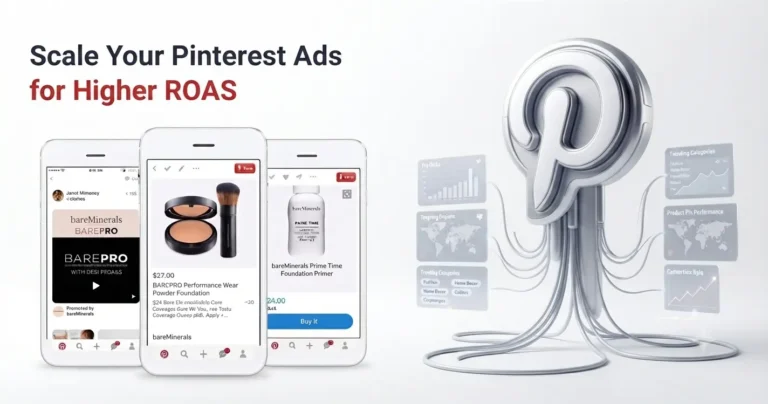
How to Scale Pinterest Ads for Higher ROAS
Scaling: Once campaigns become profitable, the next challenge is scaling Pinterest ads for higher ROAS without breaking performance. Patience beats aggression here. Increase budgets gradually, since large jumps often reset learning. Duplicate successful campaigns before making major adjustments, expand keyword groups carefully instead of chasing every search trend, and refresh creatives regularly, as even excellent Pins lose momentum over time. Most importantly, let data, not emotion, make decisions.
Images: Pinterest users naturally browse vertically, so winning campaigns are designed with mobile screens in mind from the start. Vertical creative simply performs better in the feed.
Branding: Don’t hide your logo. Clear, consistent branding helps people recognize you instantly, and that recognition compounds over time as your Pins circulate.
Headlines: Skip the clever wordplay and explain the benefit immediately. People search Pinterest with intent, so descriptive headlines help them find exactly what they’re looking for. Enabling Rich Pins also adds extra product details that build trust before visitors even reach your website.
Conclusion
For ecommerce brands searching for sustainable growth, Boost Ad Agency represent one of the most overlooked opportunities in digital advertising.The platform combines search intent, visual inspiration, and purchase planning in a way few competitors can match.
Master how to run Pinterest ads for ecommerce, develop a forward-thinking Pinterest advertising strategy 2026, understand the strengths of Pinterest ads vs Facebook ads, follow practical Pinterest ads approval tips, and learn how to scale Pinterest ads for higher ROAS without rushing the process.The brands winning tomorrow won’t necessarily have the biggest budgets.
They’ll simply be showing the right products to people already dreaming about buying them.
Written by Boost Ad Agency Team
Boost Ad Agency specializes in paid advertising, e-commerce, ad approvals, and restricted-niche campaigns across Google, Meta, TikTok, YouTube, Pinterest, and Snapchat. The team works with industries including peptides, CBD, crypto, healthcare, forex, and other restricted markets, with experience in campaign management, compliance, and scaling.
Related Blogs
Just Schedule a Call or Fill the Inquiry Form!!